
Turn waste into treasure! Fly ash to improve saline alkali land and increase production
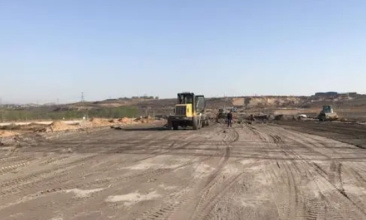
In order to solve the problems of land occupation and stockpiling of coal-fired waste "fly ash" and environmental pollution, scientific researchers from the Institute of process engineering, Chinese Academy of Sciences (hereinafter referred to as the Institute of Process Engineering) and Northern University for Nationalities put forward a new idea of using fly ash for large-area saline alkali soil improvement after harmless and directional selective activation. Through the integrated technology of directional selective modification of fly ash and soil structure reconstruction, it was prepared into an excellent saline alkali soil conditioner. According to the field test, among the 340 Mu experimental fields, the yield of the improved saline alkali land rice experimental field reached 1439 kg per mu, while the yield of the unmodified comparative experimental field was only 496 kg per mu.
The fly ash generated after power coal combustion accounts for more than 80% of all coal-fired wastes. It is difficult to achieve large-scale consumption by adding and using traditional treatment methods such as concrete, cement and wall materials. Hundreds of millions of tons of fly ash can not be used every year and can only be stacked or landfilled, which has become a great potential environmental hazard. At the same time, the salinization area in Ningxia has reached 2.6 million mu, accounting for more than 40% of the existing cultivated land. The improvement of saline alkali land has become a major demand for local agricultural development. Promoting the application of fly ash in agriculture has become a major demand of national strategy and regional development.
Mashuhua, the project leader and Process Engineering Research Institute, introduced that the R & D team successfully established the preparation and application technology of new materials for fly ash based saline alkali land improvement after making breakthroughs in many core technologies such as low-cost deep removal of heavy metals from fly ash, directional activation of fly ash, structural reconstruction of saline alkali soil and nutrient balance, and carried out field test verification and application demonstration research of nearly 1000 mu for three consecutive years, Good application results have been achieved. The content of heavy metals in the improved soil fully meets the requirements of gb15618-2018 standard for soil environmental quality and control of soil pollution risk of agricultural land (Trial), and the content of heavy metals in the harvested crops also meets the national standard on the limit of heavy metals in food.
It is understood that the total area of the test field for this yield measurement is 400 mu, and the planting area is 340 mu. When it was not improved in March, the pH value was as high as 10.4 and the salinity was 5.6g/kg.
Through the improvement of the five month planting season, the pH value of the land has been reduced to 8.4, and the salinity has been reduced to 0.8g/kg. According to the field test of Ningxia Nongken Helanshan farm (Co., Ltd.), the yield per mu of the improved saline alkali land rice test field has reached 1439 kg, while the yield per mu of the unmodified comparative test field is only 496 kg.
The relevant person in charge of Ningxia science and Technology Department said that the development and application technology of new fly ash based saline alkali land improvement materials has obvious yield increasing effect on crops. This technology can be used for the improvement of saline alkali land in Ningxia's Yellow River irrigation area, and it is suggested to carry out a larger area of promotion test.
More than 100 people from Ningxia science and Technology Department, the Department of industry and information technology, the Department of agriculture and rural areas, the Department of natural resources, the Association for science and technology of the autonomous region, the Yinchuan center of the Chinese Academy of Sciences and other departments, representatives of the joint R & D team and people from all walks of life attended the event.